Pet grooming is not only about making a pet look cleaner. One of the biggest challenges during brushing and trimming is managing loose hair. A pet grooming vacuum helps solve this problem by collecting removed fur during grooming instead of allowing it to spread throughout the room.
However, effective grooming is not simply about stronger suction. The actual experience depends on how suction, airflow, noise, and tool design work together. Understanding these factors explains why some grooming systems provide a smoother experience for both pets and owners.
During regular brushing or trimming, loose hair can easily escape before it is collected. Fine fur, undercoat, and small hair fragments are especially difficult to control because they can remain in the air or attach to surrounding surfaces.
Common grooming problems include:
Loose undercoat spreading during brushing
Fine hair sticking to furniture, carpets, and clothes
Extra cleaning work after grooming
Hair accumulation around the grooming area
Traditional grooming usually follows a simple process: remove hair first and clean the environment afterward. A grooming vacuum changes this approach by focusing on source capture, collecting hair while it is being removed.
| Grooming Method | Hair Collection Process |
| Traditional grooming | Hair falls into the environment and requires later cleaning |
| Grooming vacuum system | Hair is collected directly during brushing or trimming |
This is why a pet grooming vacuum cleaner is becoming a practical solution for reducing mess during home grooming.
Many users assume that higher suction automatically creates better grooming results. In reality, suction is only one part of the system. The way air moves through the device determines whether loose hair can be collected efficiently.
A grooming vacuum works by creating airflow that carries removed hair into a collection container. Performance depends on factors such as tool design, airflow direction, distance from the coat, and the type of hair being removed.
A well-designed system needs to balance two goals:
Capture loose hair effectively without excessive pulling sensation
Maintain comfortable airflow for different pets and coat conditions
Higher suction is not always the best choice. For sensitive animals or detailed grooming areas, controlled airflow can provide a better experience than maximum power.
Different pets have different grooming requirements. A short-haired pet, a long-haired breed, and a double-coated animal may respond differently to the same suction level.
Adjustable suction allows users to adapt the grooming process according to coat density and pet comfort. Lower settings can be useful for sensitive areas, while stronger airflow may help remove heavier shedding hair.
INVITOP LM1A integrates grooming and vacuum collection functions with multiple suction levels, allowing users to adjust performance based on different grooming situations. Its design combines brushing, trimming, and hair collection into one workflow instead of requiring separate tools for each step.
Grooming is not only a mechanical process. Pets also react to sound, vibration, and unfamiliar sensations from equipment.
Important factors include:
Motor operating sound
Vibration during use
Airflow sensation near the coat
The pet’s previous experience with grooming tools
A quieter device does not guarantee that every animal will immediately accept grooming, because individual pets have different reactions. However, reducing unnecessary noise can make the introduction process easier.
For this reason, modern grooming systems often focus on smoother operation rather than simply increasing motor power. INVITOP LM1A includes noise-control considerations, with its low-speed operation designed to reduce disturbance during grooming sessions.
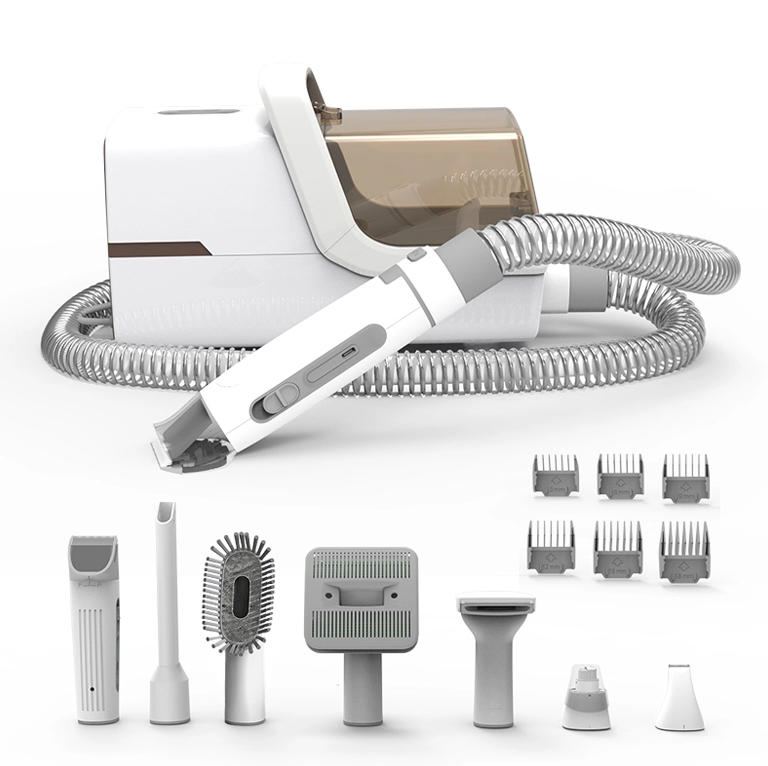
A pet grooming vacuum kit is not only a vacuum with a brush attached. Different grooming tasks require different tools and movements.
A complete grooming workflow may include brushing, trimming, deshedding, and nail care. Each function requires different attachment designs to handle specific situations.
For example, brushing focuses on removing loose hair, while trimming requires more precise control. Nail or small-area grooming tools require different handling compared with coat maintenance.
INVITOP LM1A combines multiple grooming accessories, including clipping, nail grinding, and ear/toe hair trimming functions. This integrated design helps create a more complete grooming process while keeping hair collection connected with the grooming activity.
The best grooming experience does not come from one single specification. Suction power, airflow control, noise level, and attachment design all influence how easily pets and owners adapt to the process.
A grooming vacuum should help remove hair efficiently while maintaining a comfortable environment for the animal. Stronger suction or more accessories alone do not guarantee better results if the system does not match the pet’s coat type and behavior.
A pet grooming vacuum is more than a simple cleaning tool. It combines airflow management, grooming technology, and hair collection to improve the overall grooming process.
The most effective systems balance suction performance with pet comfort. By capturing loose hair at the source and supporting different grooming functions, modern grooming vacuums provide a cleaner and more convenient approach to everyday pet care.
A pet grooming vacuum is a device that combines grooming tools with suction to collect loose pet hair during brushing or trimming.
It uses controlled airflow to move removed hair from the grooming area into a collection container.
No. The ideal suction level depends on the pet’s coat type, grooming area, and comfort level.
Pets may react to unfamiliar sounds and vibrations, so smoother and quieter operation can improve the grooming experience.
A kit may include brushes, clippers, trimming tools, nail accessories, and a vacuum collection system.
A grooming vacuum collects hair during the grooming process, while normal cleaning removes hair only after it has already spread.